
Agenda and calendar
Two components that show time instead of data: a week of appointments on a raster of half hours, and a month as a small calendar to pick a day from.
The components
| Component | For |
|---|---|
WeekAgendaComponent |
a day, a work week or a full week of appointments, drawn on a time raster |
MonthPanel |
one month as a calendar; the days can be clicked and marked |
They are independent of each other: a screen that needs both puts a MonthPanel
next to the agenda and moves the agenda in its day click handler, which is what
most calendar applications look like.
Where the appointments come from
The agenda does not hold appointments; it asks a ScheduleModel for them,
for the period it is showing:
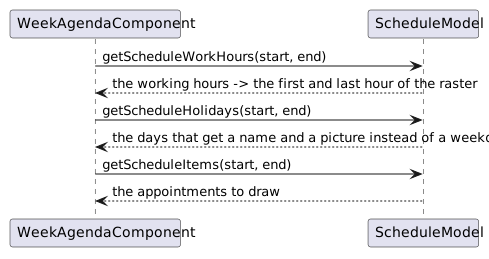
The model also tells the component when it changes: adding an appointment to the model makes it appear on the screen, without the page being rebuilt.
| Interface | What it is |
|---|---|
ScheduleModel<T> |
what the agenda asks; hands out work hours, holidays and items, and accepts listeners |
ScheduleItem |
one appointment: an id, a start, an end, a name, details, a type and an image |
ScheduleWorkHour |
a stretch of working time on one day; the raster is drawn around these |
ScheduleHoliday |
a day with a name and an image, drawn in the day header |
BasicScheduleModel<T> implements the model on a List in memory, and
BasicScheduleItem, BasicScheduleWorkHour and BasicScheduleHoliday are the
plain implementations of the three interfaces. An application with a database
behind it implements ScheduleModel itself and queries per period.
Everything the model is asked for is asked per period: when the user moves to another week the component asks again, with the new dates. A model that queries a database should query for exactly that period, not for everything.